
Supply Chain Stability in Food Raw Materials
- Feb 24
- 2 min read
In today’s global trade environment, securing supply is as important as securing price.For industrial buyers, the food raw material supply chain must function without disruption — regardless of seasonal changes, logistics delays, or regional risks.
At Tuna Sourcing, supply chain stability is built through structured sourcing, controlled logistics, and disciplined quality management.
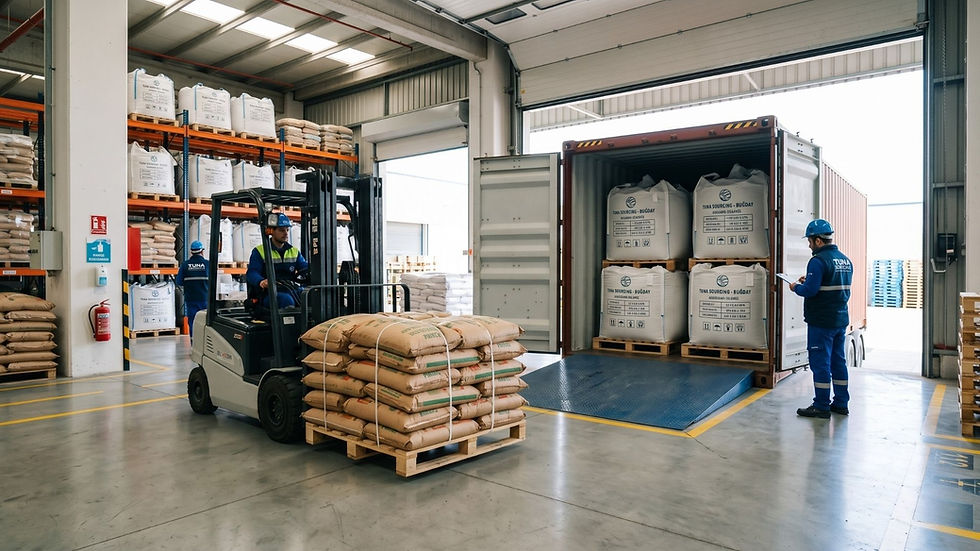
Food Raw Material Supply Chain Challenges in 2026
Seasonal and Agricultural Variability
Agricultural products are inherently dependent on climate conditions.Harvest timing, rainfall, and temperature fluctuations directly affect availability and quality.
This makes the food raw material supply chain vulnerable to unexpected shortages.
Logistics and Transit Risks
Global shipping continues to face challenges such as port congestion, container shortages, and route delays.Even a well-sourced product can lose value if not delivered on time or under proper conditions.
Building a Stable Food Raw Material Supply Chain
Multi-Origin Sourcing Strategy
One of the most effective ways to stabilize the food raw material supply chain is to avoid dependency on a single origin.
Tuna Sourcing maintains supplier networks across:
Turkey
Mediterranean regions
Neighboring sourcing zones
This allows flexibility when one origin faces supply constraints.
Controlled Supplier Relationships
Stability comes from long-term collaboration, not spot purchasing.Working with consistent suppliers ensures:
Predictable quality
Reliable production capacity
Faster response to demand changes
Logistics Planning and Shipment Control
Pre-Shipment Coordination
Before loading, all shipments are planned in detail, including:
Container type selection
Loading configuration
Moisture and ventilation controls
This reduces risks during transit.
Monitoring During Transit
Proper logistics management includes:
Container sealing and documentation
Shipment tracking
Coordination with forwarders and shipping lines
These steps ensure that products reach their destination in expected condition.
Quality Consistency Across the Supply Chain
Batch-Level Quality Control
Each shipment is verified before export through:
Moisture analysis
Visual inspection
Foreign matter control
Consistency at this stage prevents downstream issues.
Documentation and Compliance
A stable food raw material supply chain requires accurate documentation:
Phytosanitary Certificate
Certificate of Origin
COA (Certificate of Analysis)
This ensures smooth customs clearance and buyer confidence.
Supply chain stability is not achieved by chance — it is built through planning, discipline, and experience. By combining sourcing flexibility, logistics control, and quality consistency, Tuna Sourcing supports industrial buyers operating in a complex and evolving global market.


