Food Raw Material Sourcing Trends Shaping 2026
- Jan 23
- 2 min read
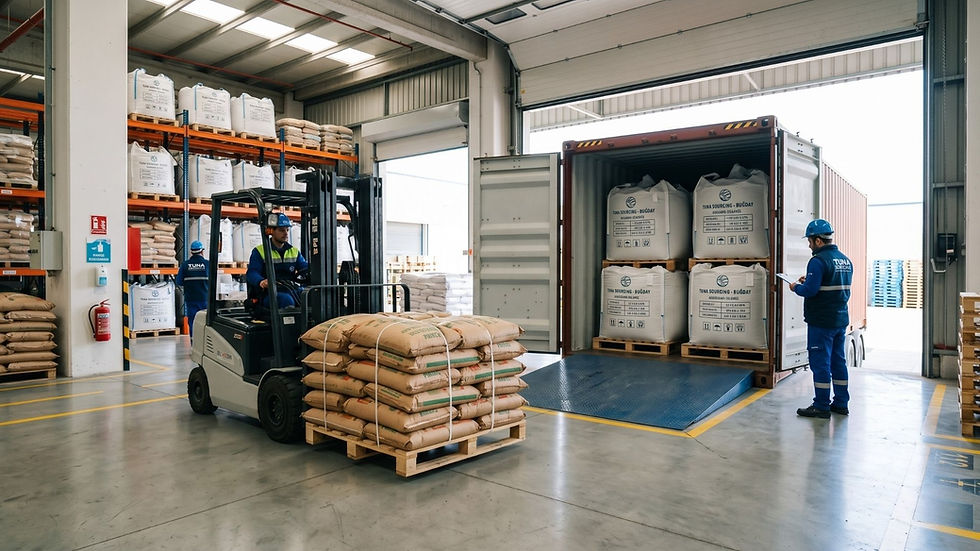
The year 2026 marks a turning point for global food supply chains.Rising regulatory pressure, climate variability, and demand for transparency are redefining how companies approach food raw material sourcing. At Tuna Sourcing, sourcing strategies are shaped by these structural changes rather than short-term market movements.

Food Raw Material Sourcing Trends Defining 2026
Supply Security Over Spot Pricing
One of the strongest food raw material sourcing trends in 2026 is the shift from opportunistic buying to secured supply models.Industrial buyers increasingly prioritize suppliers who can guarantee continuity across seasons, even if unit prices fluctuate.
This approach reduces production risk and ensures predictable formulation outcomes for food manufacturers.
Origin Transparency and Traceability
Traceability is no longer a premium feature; it is an operational requirement.Buyers expect full visibility regarding origin, processing steps, and shipment history.
For Tuna Sourcing, this means:
Origin-level documentation
Batch-based tracking
Consistent alignment between physical goods and export documents
These practices allow buyers to meet regulatory audits and internal compliance standards with confidence.
Quality-Driven Procurement Becomes Standard
Technical Specifications Gain Importance
In 2026, food raw material sourcing is increasingly driven by technical parameters rather than visual inspection alone.Moisture levels, volatile oil content, particle size, and microbial limits define acceptability.
Sourcing decisions are now made based on data, not assumptions.
Reduced Tolerance for Variability
Food manufacturers are narrowing acceptable quality ranges to protect brand consistency.This places higher responsibility on sourcing partners to control variability at origin and during processing.
Regional Diversification in Sourcing Strategies
Multi-Origin Models Replace Single-Source Dependency
Another major food raw material sourcing trend is regional diversification.Instead of relying on one country or supplier, buyers seek sourcing partners with access to multiple origins.
Tuna Sourcing supports this model by maintaining networks across Turkey and the wider Mediterranean basin, allowing flexibility without compromising standards.
The Role of Professional Sourcing Partners
From Traders to Supply Chain Managers
In 2026, sourcing partners are expected to manage risk, documentation, and quality — not just product flow.This elevates the role of companies like Tuna Sourcing from supplier to strategic partner.
Long-Term Collaboration Over Transactional Trade
Sustainable procurement now depends on long-term collaboration, shared data, and aligned expectations between buyer and sourcing partner.
Food raw material sourcing trends in 2026 clearly point toward discipline, transparency, and technical control.By aligning origin expertise with structured sourcing systems, Tuna Sourcing continues to support global buyers navigating a more complex and regulated food supply landscape.